Hold tight – we’re in a General Election year.

Antony Oliver
11 January 2024

Really interesting times ahead for infrastructure and that’s for sure....

And most likely really challenging times as well as we continue to balance the aspiration of investment to drive growth with the reality of actual delivery.


As my first Infrastructure Podcast guest of 2024 Gill Plimmer explained this week, a General Election year is sure to make the policy commitment that sits behind desired delivery even harder. 


“It's hard for the government to keep focused and it is likely that the decision to give the go ahead or not may get derailed and shunted forward to become the problem of the next government,” she said. And as infrastructure correspondent at the Financial Times for more than a few election cycles she should know.


While there is much to do to transform infrastructure delivery, there are three key issues on my mind that really need to get resolved in 2024 if we are to make progress and deliver the promised £805bn infrastructure pipeline of projects destined to transform our energy, transport, water, housing and communications landscape. 


1. Sort out the UK’s planning quagmire: we have a process to accelerate Nationally Significant Infrastructure Projects (NSIPs) but it relies on government updating the National Policy Statements that underpin the process to take account of new policies around net zero and the environment. It is bonkers that, for example, planning delays for grid connection mean we are all paying renewable generators not to generate; that congestion busting public transport projects, new social housing projects or new low carbon electricity generation is being delayed. 


2. Create policy clarity and consistency: while the private sectors investment community has plenty of money available to invest in infrastructure – the so-called dry powder – the global competition is huge, not least from the US where policies such as the Inflation Reduction Act are offering attractive subsidies to investors. The UK cannot afford to miss out on this investment.


3. Embrace new technology and modern methods: the industry has been talking about change for decades. Perhaps as we approach the 30th anniversary of the Latham Report it is finally time for the whole supply chain – from client down – to truly “construct the team” and embrace collaboration and the new technologies and techniques that have been threatening to transform the sector ever since.

We know that infrastructure investment has the power to transform the UK and the world in the face of massive societal challenges such as climate change, pollution, the cost of living crisis, housing shortages and social injustice. And it seems that never before has there been such support for investment by the public and private sector.


Now is therefore the moment to accelerate the change that will make it happen. We have to make sure that out politicians, industry leaders and grass roots delivery teams recognised that, for all the reasons to delay, this moment has arrived in 2024.
by Antony Oliver • 12 November 2026
How can the water sector deliver double the output, lower carbon, and maximise public value from every customer bill? Well in the latest episode of The Infrastructure Podcast, I’m joined by Richard Lee, Director of Engineering at Anglian Water's @one Alliance to examine his plans for the next five years an beyond. Have a listen here where you will find all 187 episodes wherever you get your podcasts - or search “The Infrastructure Podcast” on Spotify, Apple, Google or YouTube. The @One Alliance was launched 21 years ago as a radical procurement experiment, designed to dismantle traditional contracting by binding rival engineering giants, including Balfour Beatty plc, Skanska, and Mott MacDonald Bentley | MMB, into a shared commercial fate. Two decades and £4bn in capital investment later, that experiment has redefined how Anglian Water Services and the whole sector builds. But with AMP8 demanding a staggering £3bn, 750+ scheme delivery plan between 2025–2030, the pressure is on to meet Ofwat's targets.
by Antony Oliver • 5 November 2026
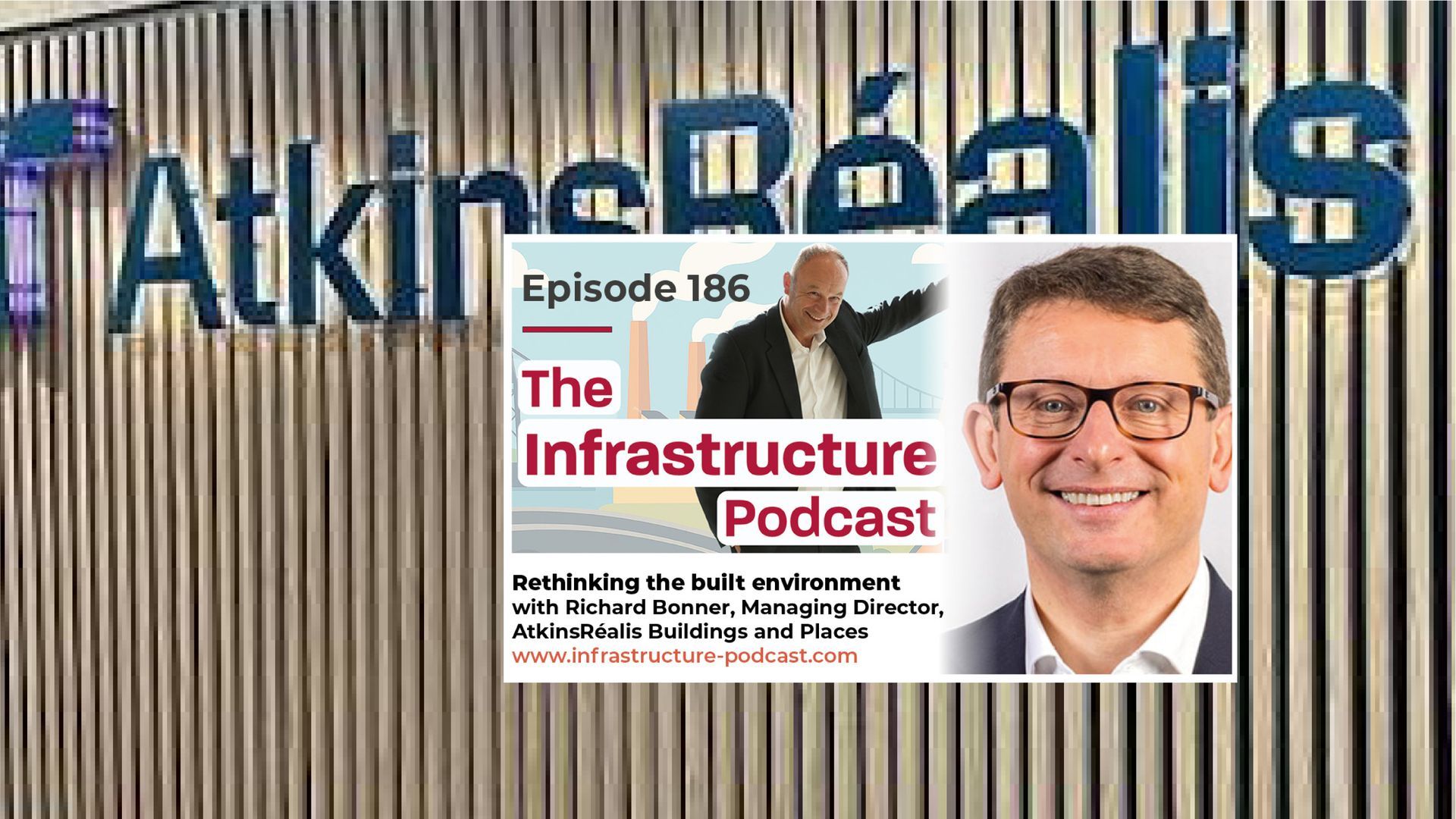
How often do we hear about siloes holding back the UK’s infrastructure potential? Well this week on The Infrastructure Podcast I chat to Richard Bonner, Managing Director for Buildings and Places at AtkinsRéalis about how to break them down and boost the impact of investment on communities. Have a listen here:find all 186 episodes wherever you get your podcasts - search “The Infrastructure Podcast” on Spotify, Apple, Google or YouTube. Historically, housing, transport, architecture, and investment have operated in isolation. But now we face housing shortages, decarbonisation mandates and tight budgets, a piecemeal approach just doesn't cut it anymore. And as Richard points out, we need a joined-up, place-based model that bridges the gap between major economic investments and the everyday lived experience of local communities. I really enjoyed this conversation in which we get stuck into: - How AtkinsRéalis is breaking down traditional engineering and planning siloes. - The role of “integrator” between public policy, private capital and long-term asset management. - Real-world impact, from unlocking housing around transport hubs like London’s Elephant & Castle to shaping growth along the Northern Powerhouse Rail corridors. - Delivering true, lasting social legacy for UK communities.
by Antony Oliver • 29 October 2026
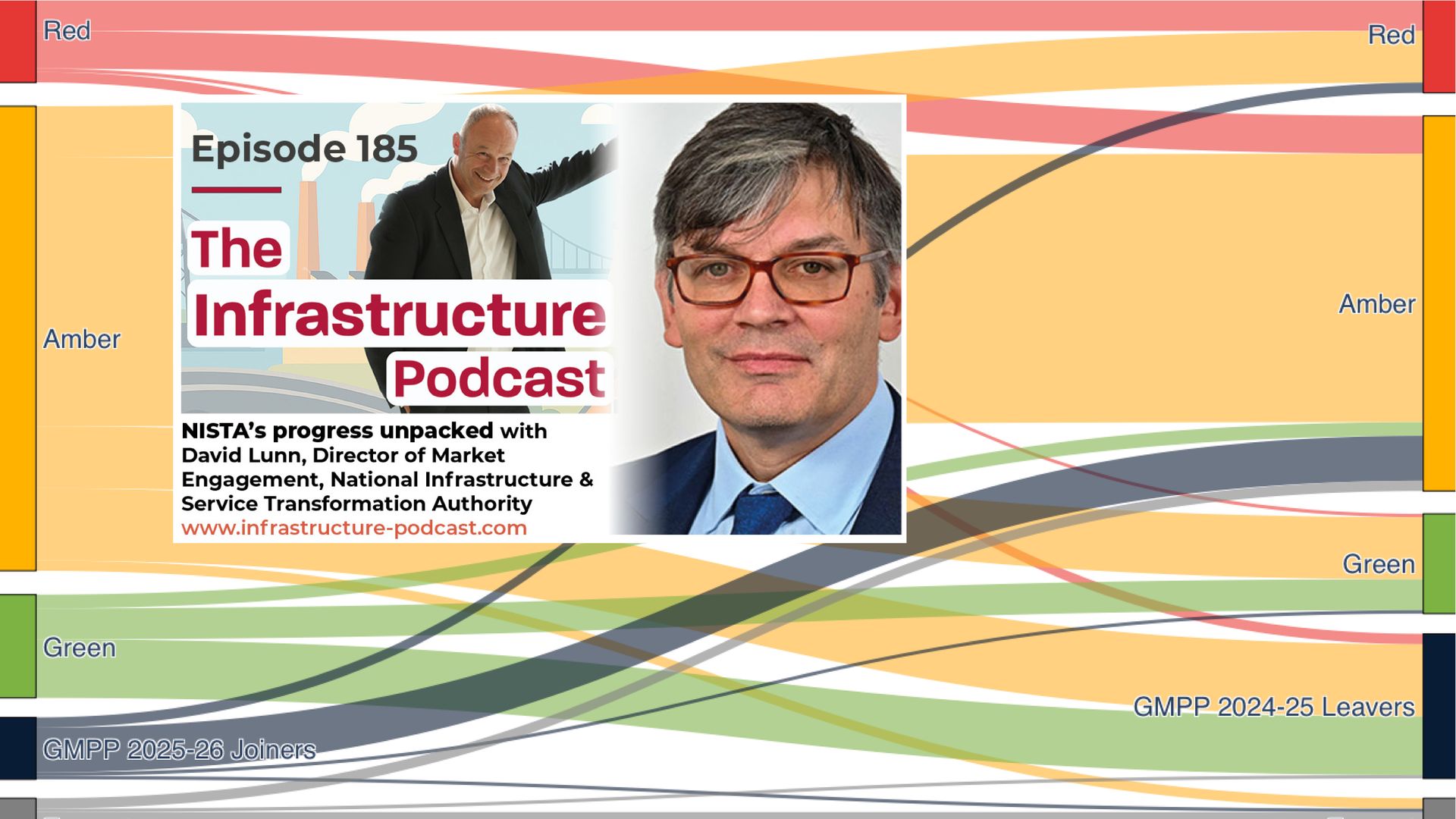
It’s an old story for sure – but the UK infrastructure sector continue to suffer from chronic inefficiencies, fragmented planning, and ballooning timelines. In the latest episode of The Infrastructure Podcast, recorded live at the Twin Talks breakfast event hosted by Bentley Systems in London, I sit down with David Lunn, the new Director for Market Engagement at NISTA the National Infrastructure and Service Transformation Authority (NISTA) to discuss how it plans to help the industry transform its performance. Have a listen here or find all 185 episodes wherever you get your podcasts - search “The Infrastructure Podcast” on Spotify, Apple, Google or YouTube. With a £718bn public and private investment pipeline on the line, NISTA is leading a massive overhaul in how the UK plans, designs, and delivers major projects. So David’s mission? Make UK infrastructure investable again. In this wide-ranging discussion, we break down: - How NISTA plans to modernise project design and execution across the supply chain. - The strategy behind unlocking crucial private investment and creating an investor-ready pipeline. - How giving industry long-term market visibility will solve regional bottlenecks and boost skills investment. Having led the establishment of the UK Infrastructure Bank and worked on landmark projects like Crossrail, David brings nearly 30 years of civil service expertise to this critical transformation.
by Antony Oliver • 22 October 2026
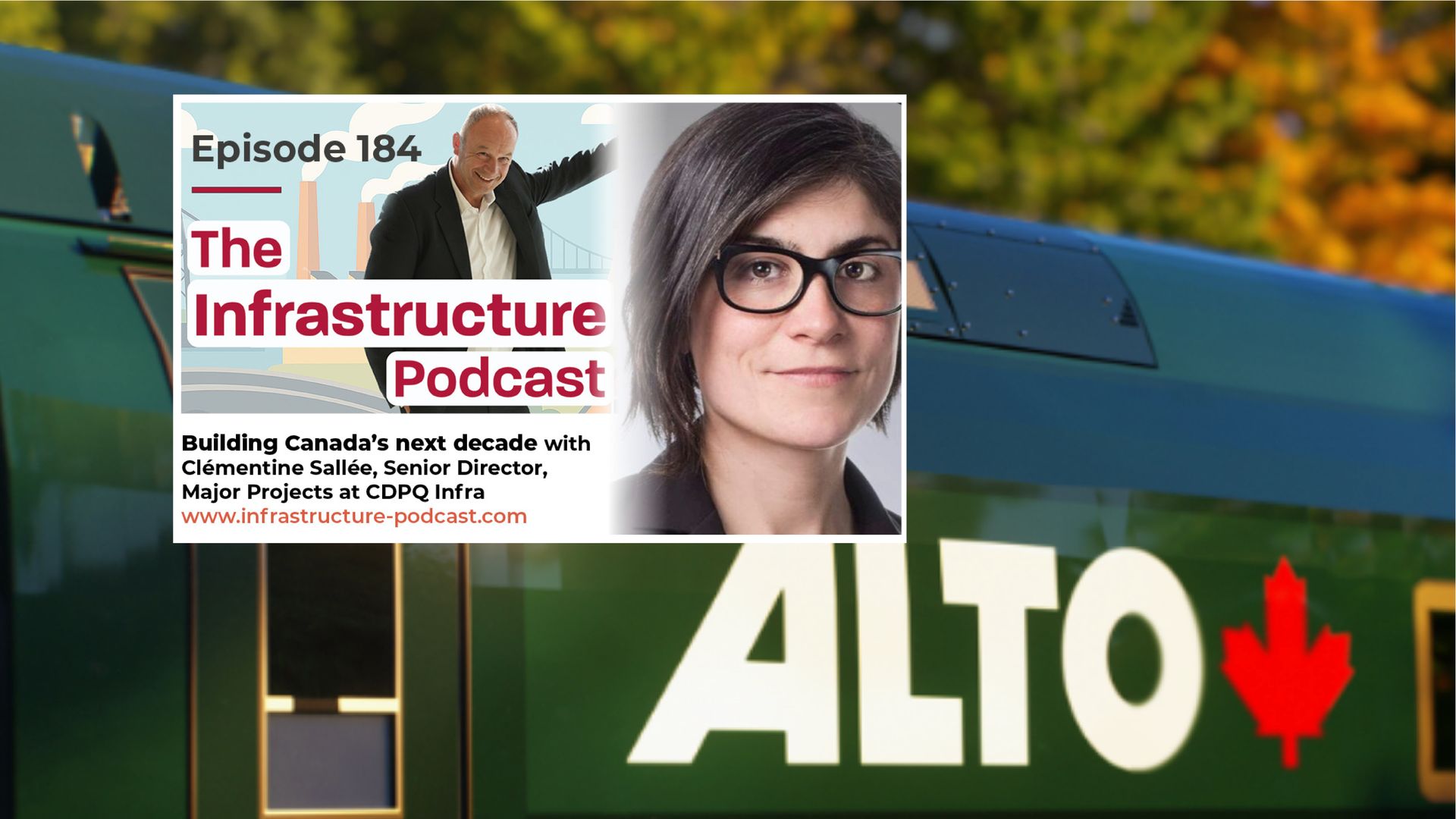
What can Canada’s infrastructure leaders learn from Québec's recent major project successes? And indeed, what can the UK learn from Canada? This latest episode of The Infrastructure Podcast with Clémentine Sallée, Senior Director of Major Projects at CDPQ Infra was recorded live at the recent Transforming Infrastructure Performance Summit in Toronto hosted by the Infrastructure Policy Advancement team at Bentley Systems and the UK Government. Have a listen here or find the episode wherever you get your podcasts - search “The Infrastructure Podcast” on Spotify, Apple, Google Québec is currently delivering some of the country’s most ambitious infrastructure projects, from new high speed rail and urban transit expansions to massive airport developments and nuclear power stations. But beyond the scale, these projects offer critical insights into: - Leadership and partnership models for complex programmes - Procurement and commercial strategy for scaling delivery - Effective governance in challenging environments With 20+ years of global experience in major project delivery and infrastructure finance, Clémentine brings a refreshing perspective on how to deliver complex infrastructure successfully.
by Antony Oliver • 22 October 2026
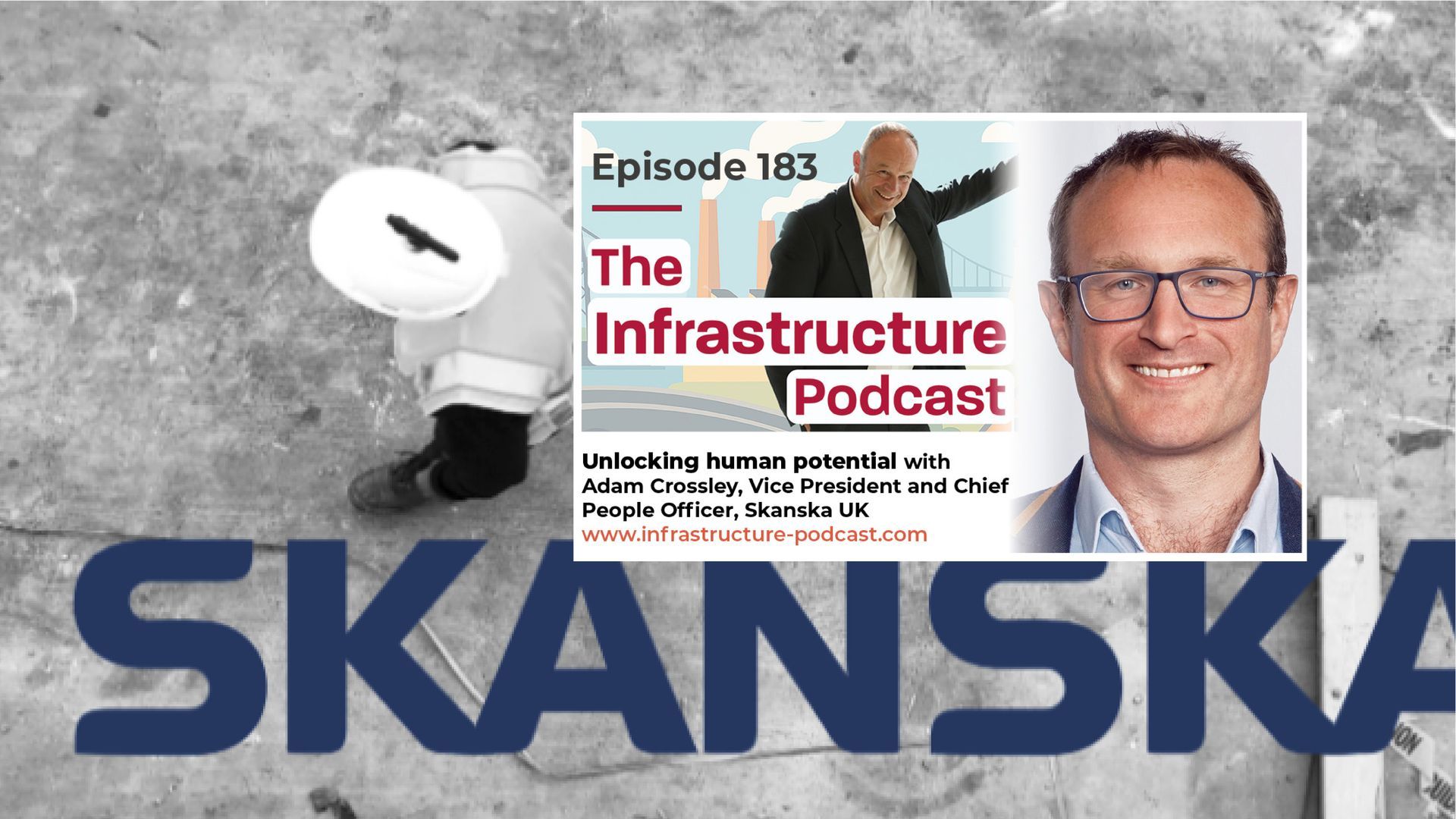
In this week’s episode of The Infrastructure Podcast I chat to Adam Crossleyy, chief people officer at Skanska UK about unlocking human potential across the supply chain as key to delivering the UK’s multi-billion-pound infrastructure pipeline. Have a listen here: find all 183 episodes wherever you get your podcasts - search “The Infrastructure Podcast” on Spotify, Apple, Google or YouTube. So much to discuss in this episode as we dive deep into: 🔹 How rapid adoption of AI, data analytics, and digital systems is redefining the talent we need. 🔹 Overcoming entrenched traditional practices to attract digitally fluent, diverse talent. 🔹 Equipping the workforce for carbon literacy, Modern Methods of Construction and delivering real social value. And with nearly two decades at Skanska and a career as a British Army Officer before that, Adam brings invaluable insights into leading people through profound industry transformation.
by Antony Oliver • 8 October 2026
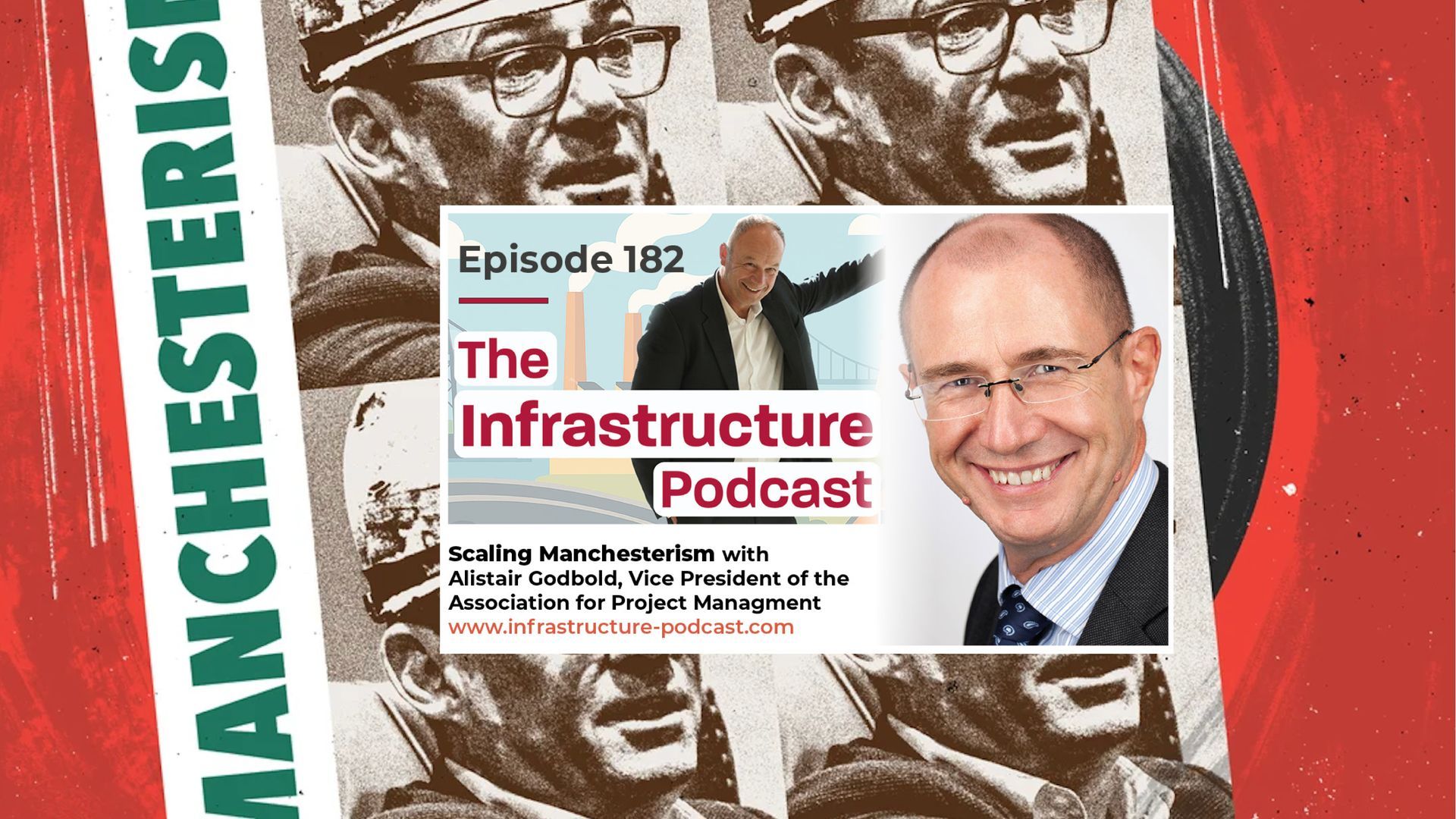
Can Manchesterism transform UK project delivery? In the latest episode of The Infrastructure Podcast, I’m joined by Alistair Godbold, Vice President of the Association for Project Management and Director at The Nichols Group to unpack what this new era of devolved decision making really means for the sector. Have a listen here: find all 182 episodes wherever you get your podcasts - search “The Infrastructure Podcast” on Spotify, Apple, Google or YouTube. As Andy Burnham’s regional Manchesterism approach, built on devolved power, sustained transport investment, and community-centric regeneration, looks to scale nationally, major questions remain about whether central government and the wider sector are truly set up to execute. And with a £718bn infrastructure pipeline in focus, the spotlight has firmly turned from project planning to actual project delivery.
by Antony Oliver • 1 October 2026
As debate over Heathrow Airport’s runway 3 expansion project rumbles on again, this week’s special episode of The Infrastructure Podcast talks to Helen Elsby, Heathrow's chief development officer about the actual multi-billion pound work programme going on right now. The episode was recorded live at the latest Twin Talks event in London hosted by Bentley Systems’ Infrastructure Policy Advancement team and includes a panel discussion with Nigel Cole, managing director infrastructure at Mace Construct and Harriet Wheeldon, director at Mott MacDonald, both key members of the Heathrow delivery supply chain. Have a listen here or find all 181 episodes wherever you get your podcasts - search “The Infrastructure Podcast” on Spotify, Apple, Google or YouTube. With passenger volumes continuing to reach record highs, Heathrow continues to progress plans to combat capacity constraints and keep passengers and cargo moving in, out and across the country smoothly. The scale of ambition is staggering: a £1.3 billion commitment in 2026 to conclude the current H7 investment cycle, more than £5 billion planned for the forthcoming H8 period (2027–2031). The green-lighting of planning work for a potential further multibillion pound investment through the R3 expansion programme adds to the complexity. As the discussion hears, Heathrow plans to build faster, smarter, and more efficiently to deliver maximum value for passengers, airlines, and the UK economy.
by Antony Oliver • 24 September 2026
With nuclear, wind, solar, and electrification dominating the Net Zero conversation, what role, if any, does the massive gas network already sitting right beneath our feet really have in the UK's energy transition? In the latest episode of The Infrastructure Podcast, I'm joined by James Earl, Chief Executive of Future Energy Networks (FEN), to explore how exactly how the UK's world-class gas network can help power our future. Have a listen here or find all 180 episodes wherever you get your podcasts - search “The Infrastructure Podcast” on Spotify, Apple, Google or YouTube. In the episode we dive into: o Why a secure and resilient energy transition cannot rely on electricity alone. o The soaring energy demands driven by new technologies like AI data centres. o How existing gas infrastructure can serve as a vital energy storage asset and spearhead the use of green gases. o The role of hydrogen and biomethane in our energy future.
by Antony Oliver • 17 September 2026
In the latest episode of The Infrastructure Podcast I chat to Javier Cavada Camino, PhD (Dr. Eng.), President and CEO of Mitsubishi Power EMEA about how the UK can balance the insatiable demand for power from the new data centres driving our AI revolution with the need to keep the nation’s lights on. Have a listen here or find all 179 episodes wherever you get your podcasts - search “The Infrastructure Podcast” on Spotify, Apple, Google or YouTube. For all the current debate around slowing down AI development, the reality is that the UK remains committed to building the data centre backbone required to underpin the technology. But given the current pressure on the UK’s power generation, distribution and storage infrastructure, the question is how we bridge the widening gap between supply and demand. Javier and Mitsubishi are leading development of the off-grid, so called “behind the meter” technologies designed to close that gap with low carbon solutions. We are talking advanced hydrogen and biomethane read turbines, new power storage technologies to smooth the flow of wind and solar power, and standalone uninterrupted power supply systems helping to stabilise local grids. And since data centres can be planned and built in 18-36 months compared to the decades now required for new centralised power infrastructure to come on line, it is clearly technology that cannot be ignored.
by Antony Oliver • 10 September 2026
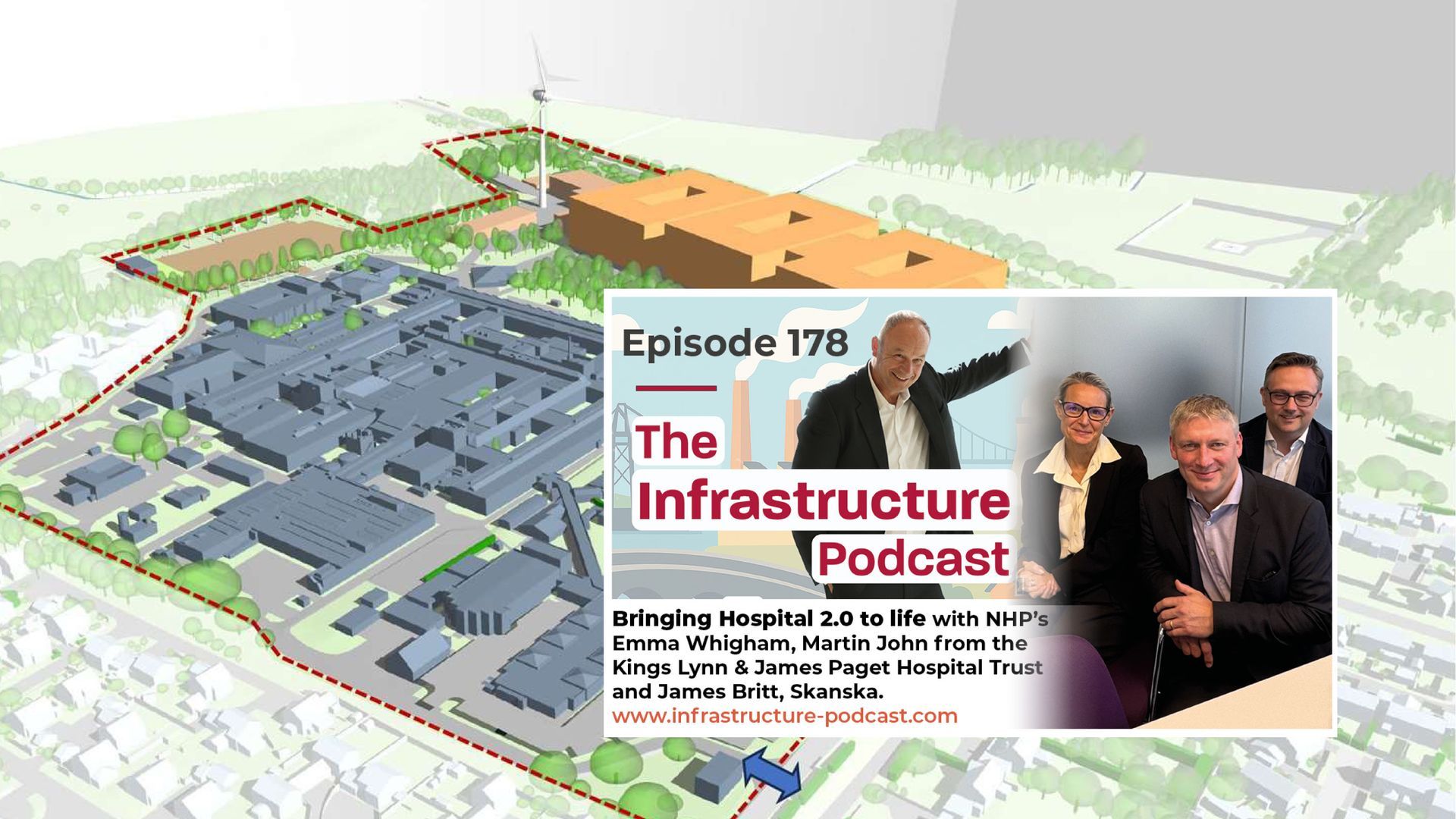
What does the single largest investment in NHS infrastructure in recent decades actually look like in reality? My guests on The Infrastructure Podcast this week are the people on the front line of New Hospital Programme 2.0 Alliance delivery at the James Paget University Hospitals NHS Foundation Trust in Great Yarmouth and the Queen Elizabeth Hospital NHS Trust in Kings Lynn. Have a listen here or find all 178 episodes wherever you get your podcasts - search “The Infrastructure Podcast” on Spotify, Apple, Google or YouTube. It’s a fascinating conversation with Emma Whigham, the NHP Hospital 2.0 Alliance Director, Martin John, Strategic Director for Kings Lynn and James Paget hospital trusts, and James Britt, Programme Director at construction partner, Skanska as we talk through what makes the new H2A Alliance truly transformational in terms of delivering better outcomes for the client and for patients and for the clinical staff. In the first wave ten alliance partners have been secured across eleven hospital trusts to start – and test - this new delivery approach. We are talking industrialised delivery; deep collaboration; truly national supply chains and long term systemic approach to design delivery and operation of our future hospitals. And with £37bn at stake in the first of three waves of investment stretching out to the mid 2040s it is a programme that really has the opportunity to move the dial when it comes to transforming delivery.
More posts